Solar energy market prepares for a new growth cycle in 2027
Consolidation of the sector, investments in engineering and evolution of metallic structures point the way to a more competitive industry.
By Thiago Tesserolo Souza4 min read
Consolidation of the sector, investments in engineering and evolution of metallic structures point the way to a more competitive industry
By Thiago Tessarolo, managing partner and CEO of TESSA
The Brazilian solar energy market is going through a phase of transformation. After years of accelerated growth, the sector began to live with more selective investments, regulatory changes, adjustments in incentives, new conditions for access to the electricity network and high interest rates.
This scenario requires planning, efficiency and increasingly informed business decisions. At the same time, it opens up opportunities for companies prepared to keep up with changes and develop competitive solutions.
Over the past two years, we have closely followed this movement. We perceive a more judicious market, in which projects need to present consistent technical and economic fundamentals to move forward.
Compared to 2025, we also observed a change in the profile of the public present at industry events. The circulation seems more targeted, with greater participation of professionals directly involved in business negotiations and decisions.
In a nutshell, a more qualified audience and conversations with greater business potential.
Competitiveness and innovation gain importance in the solar sector
After the strong expansion recorded in 2020 and 2021, we already considered it natural for the solar energy market to enter a consolidation stage.
At TESSA, we seek to anticipate this transformation. We focus efforts on improving products, productive efficiency and strengthening operations in segments in which we identify competitive advantages.
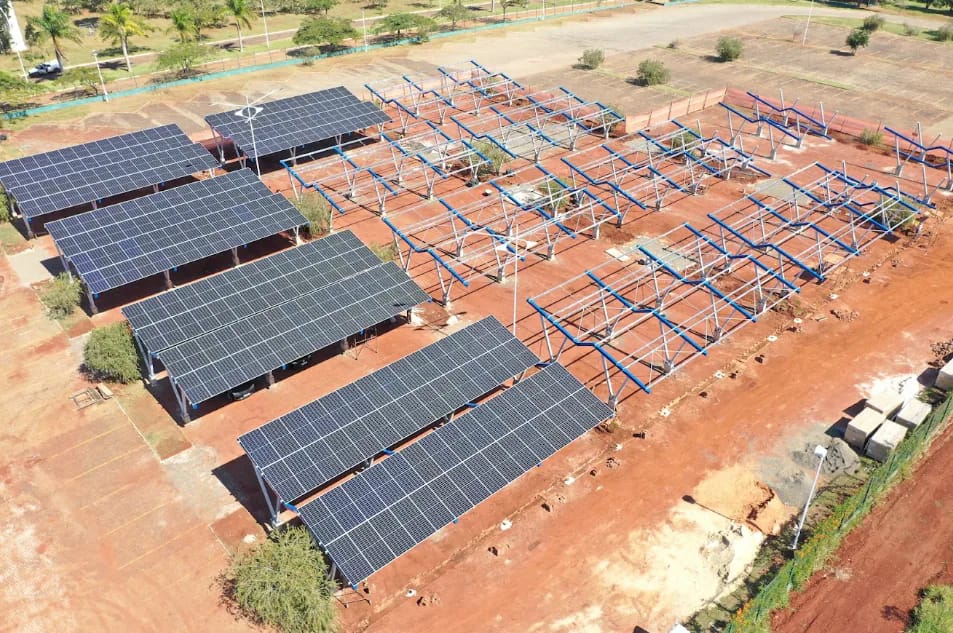
One of the results of this work was the evolution of metallic soil structures used in solar power plants. We reviewed our solutions to make them technically more efficient and competitive, keeping up with the demands of increasingly structured projects.
We also made progress in the development of galvanized steel carports, structures that combine vehicle coverage and the possibility of photovoltaic power generation.
These improvements reflect a growing industry need: to develop products capable of reconciling structural performance, economic viability and installation efficiency.
The market is more demanding, and I consider this positive. Companies that invest in engineering, quality and productivity tend to be more prepared to respond to new investment conditions.
Solar energy fairs and events have also contributed to this reading. In addition to strengthening relationships, these meetings allow you to follow trends, identify demands and understand industry movements.
In recent experiences, we have had productive business conversations, qualified contacts, and relevant opportunities for new projects and partnerships.
In the Brazilian market, we observed a consistent demand, although part of the investments is still in the evaluation and planning phase. This behavior demonstrates the search for greater predictability and security in decisions.
Prospects for 2027 indicate opportunities for recovery
Looking ahead to 2027, I see positive prospects for the solar energy sector, especially given the possibility of resuming the pace of investments and advancing projects that are currently under development.
Solar energy continues to play an important role in the Brazilian energy matrix. At the same time, the search for efficiency, productivity and sustainable solutions keeps open opportunities for manufacturers, integrators, investors and suppliers.
My expectation is that the Brazilian market will find a new balance, with more structured projects and conditions capable of favoring a cycle of growth.
For TESSA, this scenario represents the possibility of transforming the investments made in recent years into new contracts, partnerships and results.
We are improving our metal structures, expanding our international presence and strengthening our operations in strategic segments. This work puts us in a favorable position to keep up with an eventual acceleration in demand.
Naturally, there are no magic solutions. Sustainable growth depends on consistent work, technical capacity, discipline and meeting the commitments made.
I also want Brazil to find increasingly favorable conditions for the development of new projects, benefiting the entire solar energy production chain, including our competitors.
I believe that a sector is strengthened when there is room for everyone to thrive.
We remain optimistic about the commercial outlook for 2027, but aware that the results will depend on the evolution of the economic environment, investment conditions and the ability of companies to execute.
The future of solar will continue to be built with engineering, innovation, productivity and work.
Thiago Tessarolo: Managing Partner and CEO
TESSA Tecnologia e Desenvolvimento