Hot-dip galvanizing is decisive for steel structure performance
Hot-dip galvanizing is an industrial process in which steel is immersed in a bath of molten metal.
By Thiago Tesserolo Souza5 min read
Understand the technical differences between zinc-coated, zinc-aluminum and Magnelis® steel
In steel structures, choosing the steel doesn't end with mechanical strength. In most applications, especially in outdoor or aggressive environments, the service life of the structure is defined by its corrosion protection system. This is where hot-dip coated steels come in, widely used in steel roof structures, fixed PV mounting structures, carports, poultry houses, steel roof framing and public works.
Although they look similar, zinc-coated steels, zinc-aluminum alloy steels and Magnelis® steels behave very differently over time. These differences directly affect the durability, maintenance needs and total cost of ownership of the steel structure.
🔍 What hot-dip galvanizing is and why it works
Hot-dip galvanizing is an industrial process in which steel is immersed in a bath of molten metal, forming a continuous metallic coating that adheres strongly to the surface. This coating acts as the main barrier against corrosion in steel structures exposed to the weather or to aggressive environments.
The protection system works in two complementary ways. On one hand, the coating creates a physical barrier that isolates the steel from direct contact with the environment. On the other, cathodic protection takes place: the zinc or metal alloy corrodes preferentially to the steel, protecting the substrate even in areas that are cut, drilled or damaged during assembly.
The effectiveness of this system depends on well-defined technical factors, such as the chemical composition of the coating, the thickness or mass of the applied layer, the exposure environment and the geometric detailing of the parts that make up the steel structure.
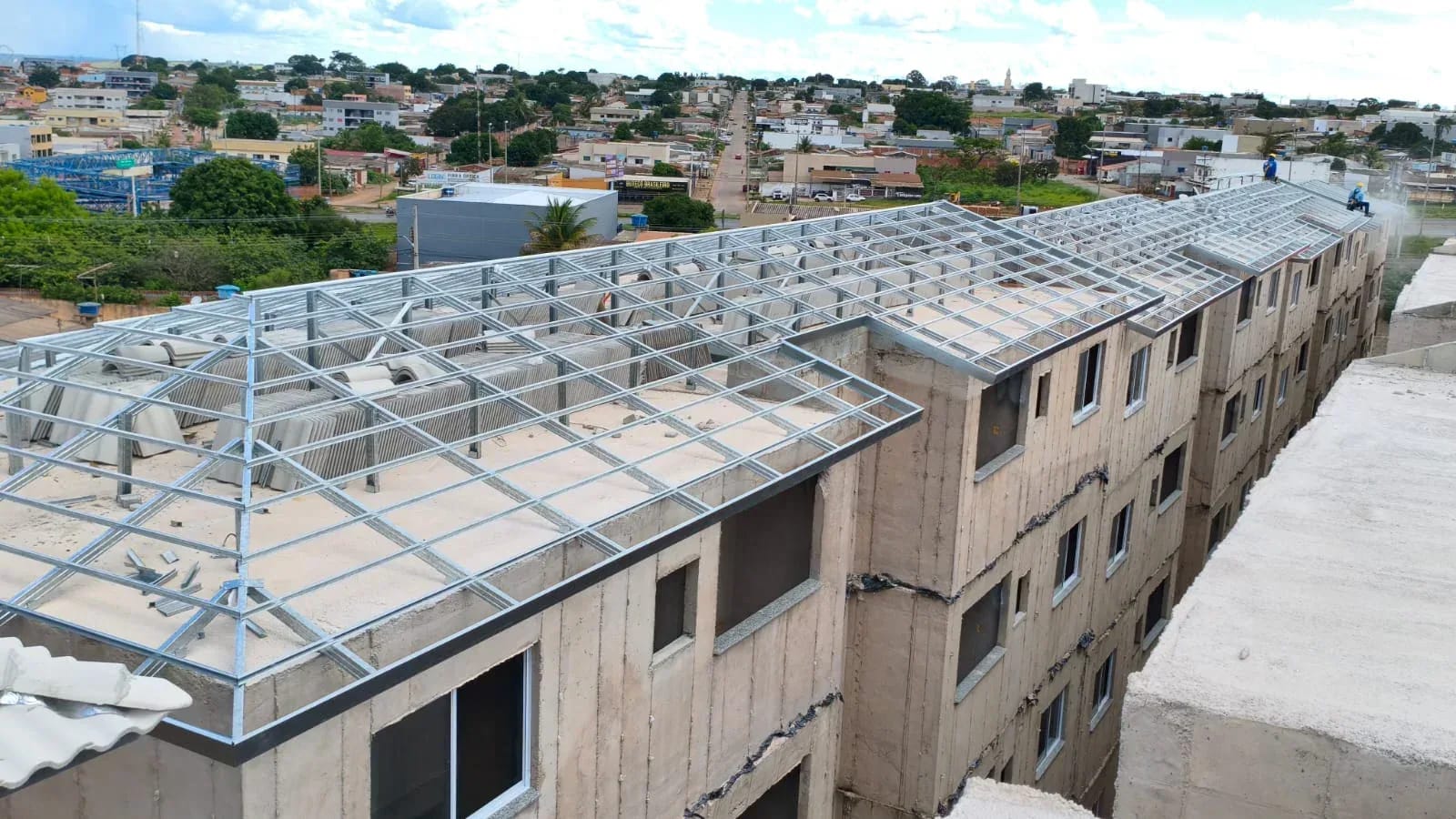
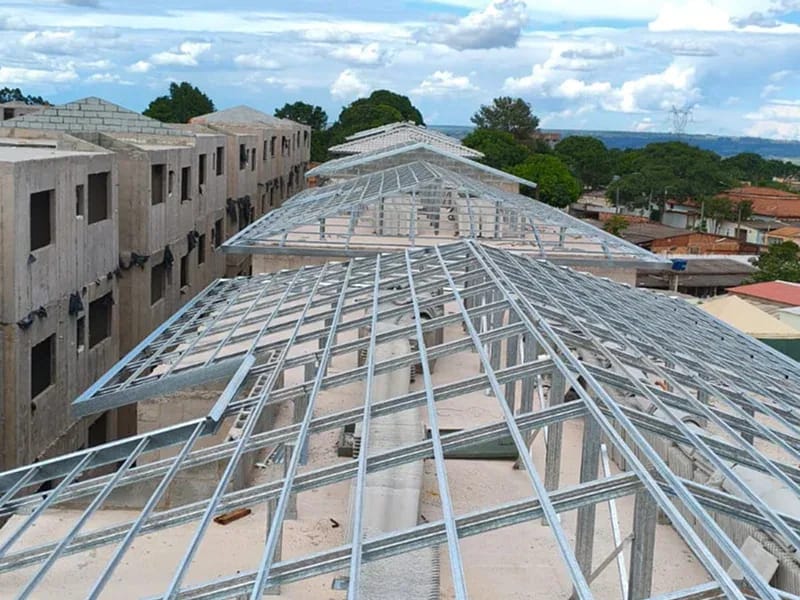
Residencial Jardim das Oliveiras - Águas Lindas de Goiás
🧱 Pure zinc-coated steels and their applications
Zinc-coated steels have a coating made essentially of pure zinc, applied by hot-dip in accordance with well-established technical standards. It is a widely known and widely used system in the Brazilian market.
From a technical standpoint, zinc-coated steels provide effective corrosion protection in environments of low to medium aggressiveness, behave predictably over time and offer good cost-effectiveness when correctly specified. They are governed by standards such as ABNT NBR 7008, ABNT NBR 7013 and ABNT NBR 6323.
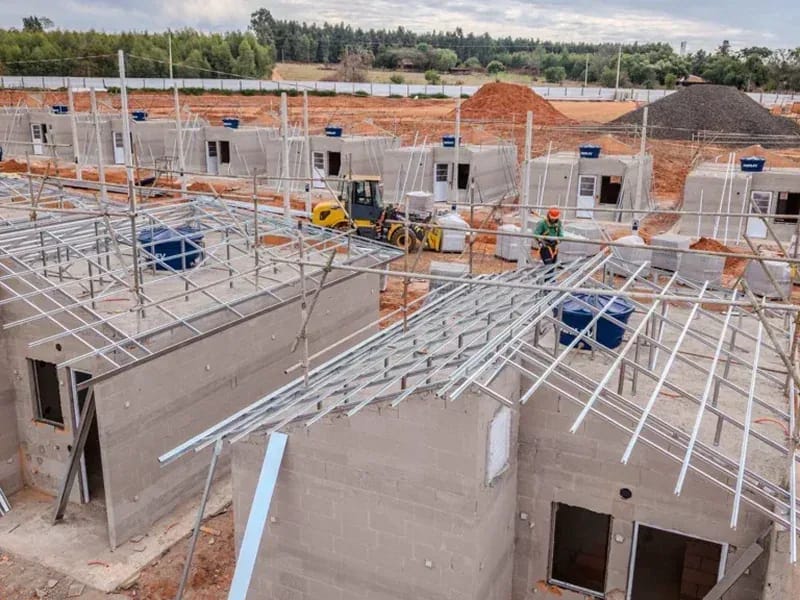
These steels are widely used in steel roof framing, steel roof structures, steel structures for affordable housing and urban or rural applications with moderate aggressiveness. When the specification correctly accounts for the environment and the coating mass, zinc-coated steel fully meets the structural and durability requirements of these applications.
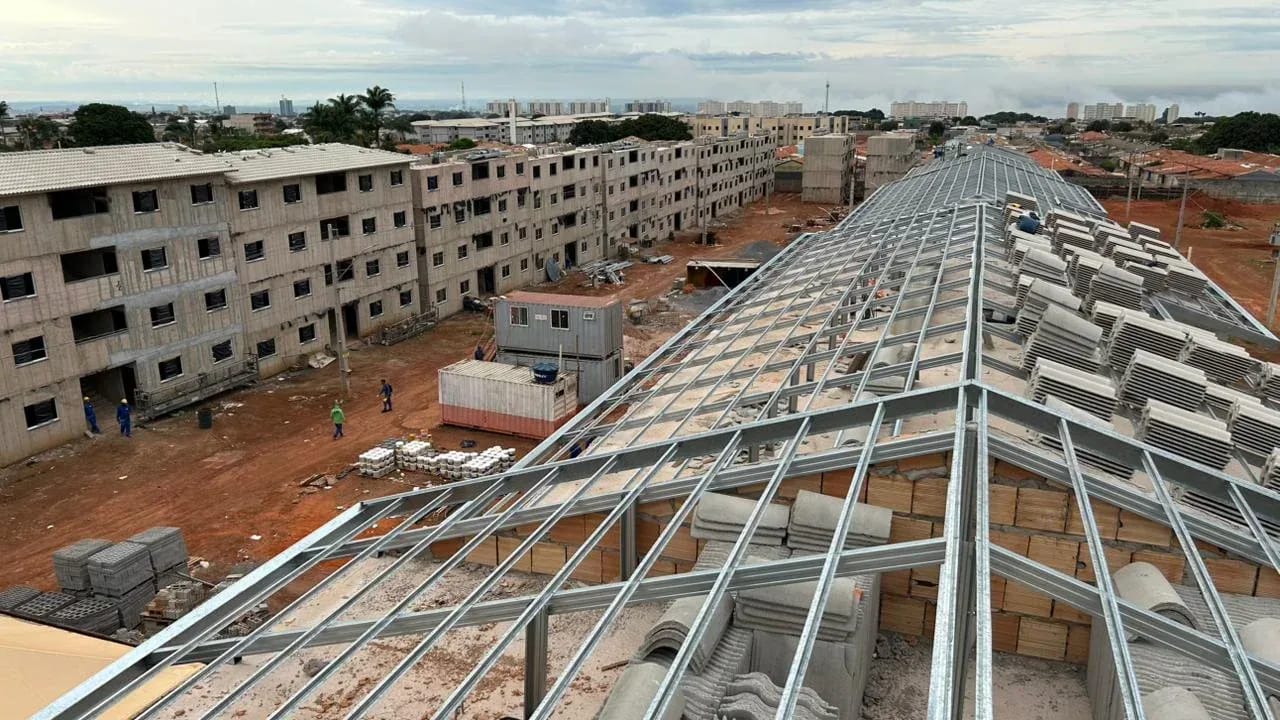
Condomínio Imperial - Valparaíso de Goiás
🌧️ Zinc-aluminum alloy steels and the gain in durability
Steels coated with zinc-aluminum alloys represent a technical step forward compared to pure zinc. Adding aluminum to the coating changes the corrosion mechanism and significantly reduces the material's degradation rate over time.
Aluminum contributes to the formation of a more stable passive layer, improves performance under wet-dry cycles and extends durability in more aggressive industrial and rural environments. As a result, these steels offer a longer service life than conventional zinc-coated steel and greater dimensional stability.
This type of coating is frequently specified for fixed PV mounting structures, steel carport structures and long-lasting outdoor structures, where durability is a decisive factor for the economic viability of the project.
🧪 Magnelis® as the evolution of coated steels
Magnelis® is a metallic coating composed of zinc, aluminum and magnesium, developed to significantly raise the corrosion performance of hot-dip coated steels. The presence of magnesium changes the electrochemical behavior of the coating and promotes the formation of more stable and adherent corrosion products.
Its main technical advantages include a significantly lower corrosion rate, the ability to self-heal at cut edges and perforations, and excellent performance in highly aggressive environments. Even with lower coating masses, Magnelis® achieves a longer service life compared to other systems.
This type of steel is widely used in ground-mount solar structures, poultry house steel structures, coastal regions, industrial areas and projects that require high durability with low maintenance.
📐 How to technically estimate the service life of galvanizing
The service life of a metallic coating is not a subjective estimate. It can be calculated technically from the thickness or mass of the coating and the corrosion rate of the environment, usually expressed in micrometers per year according to the corrosivity category.
In practical terms, the estimated service life is the coating thickness divided by the average corrosion rate of the environment. More aggressive environments have higher rates, which reduces the coating's service life and technically justifies the use of more advanced solutions, such as zinc-aluminum alloys or Magnelis®.
Condomínio Imperial - Valparaíso de Goiás
🌪️ The exposure environment is the decisive factor in choosing the coating
A recurring mistake in steel structure projects is defining the coating based only on the type of structure. In practice, the decisive factor is the exposure environment, classified by international corrosivity standards ranging from C1 to C5.
Two steel structures for solar plants, structurally identical, may require completely different coatings simply because of the environment where they will be installed. Ignoring this factor directly compromises the durability and performance of the project.
📄 Quality certificates and traceability are not optional
Correctly specifying the steel and the coating is not enough without technical proof of the material supplied. That is why requiring quality certificates issued by the steel mill is a basic good-engineering practice.
These documents prove the chemical composition of the steel, the tested mechanical properties, the type and mass of the metallic coating, the technical standard met and the traceability of the batch. In coated steels, small variations in coating mass can lead to large differences in service life. Without certification, there is no technical guarantee of performance.
📌 Conclusion
Hot-dip coated steels are not all the same. Zinc-coated, zinc-aluminum and Magnelis® represent distinct levels of protection, durability and total cost of ownership. Choosing the right coating, based on technical standards, the exposure environment and the expected service life, reduces risk, minimizes maintenance and makes the investment more predictable.
In engineering, durability is not an assumption. It is calculation, specification and proof.
Want to know more? Visit the Tessa blog and follow all the news about our participation in Intersolar 2025 and the innovations in the solar sector.
Want to learn more about Tessa's steel roof structures? 🔗 tessa.eng.br/estruturas-metalicas-para-telhado
📞 (17) 99785-8050 | (17) 3267-1220
🔎 Tags
#steelStructures #galvanizedSteel #galvanizing #hotDip #steelRoofFraming #solarStructure #solarPlant #carport #poultryHouse #corrosion #serviceLife #ABNTstandards #Magnelis